Today's hiring infrastructure supports a peculiar equilibrium. Employers fund repeated job promotion to cut through overwhelming applicant volume, while candidates pay for visibility and signals that promise relevance. (1, 2)
Platforms like LinkedIn reinforce this dynamic through features such as "Top Jobs Picks for You," which presents itself as a personalized matching service while prioritizing sponsored roles. (3, 4)
From LinkedIn: "Promoted jobs are paid for by hirers actively engaged with that specific job and may appear higher in your search results to increase visibility to candidates like you, based on your profile, skills, and activity. You can also find a reminder of 'How promoted jobs are ranked' at the top of your search results page." (5)
This approach, where "top" opportunities prioritize "brought to you by" sponsors creates a false promise of relief when signing up for the Premium subscription. (6, 7, 8)
Meanwhile, sponsored postings marketed as a way to attract more relevant candidates often do the opposite at scale, amplifying exposure and driving untenable application volume. (9, 10)
The result is a system optimized to monetize imbalance and chaos. In fact, it's a system designed to increase it.
Emotional State as a Product
Job seekers arrive on LinkedIn in a uniquely vulnerable state. Many are unemployed, underpaid, burned out, or quietly panicking. They're refreshing feeds between meetings, scanning listings late at night, and wondering if they're already behind.
That emotional context matters because LinkedIn doesn't just monetize attention here.
Search vs. Recommendations: Two Very Different Experiences
Here's what many job seekers observe, repeatedly and consistently:
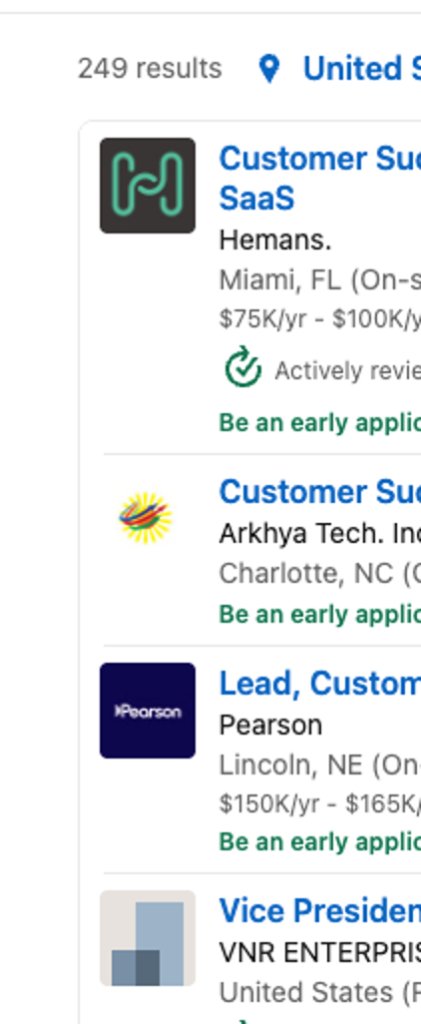
Manual Search (Jobs → Search Bar Entry → Filters)
- Results skew toward recency and relevance
- Sponsored roles appear, but they don't dominate
- The experience feels closer to a traditional job board, and LinkedIn treats search as a results list, rather than prioritizing jobs they feel are most relevant
(11)
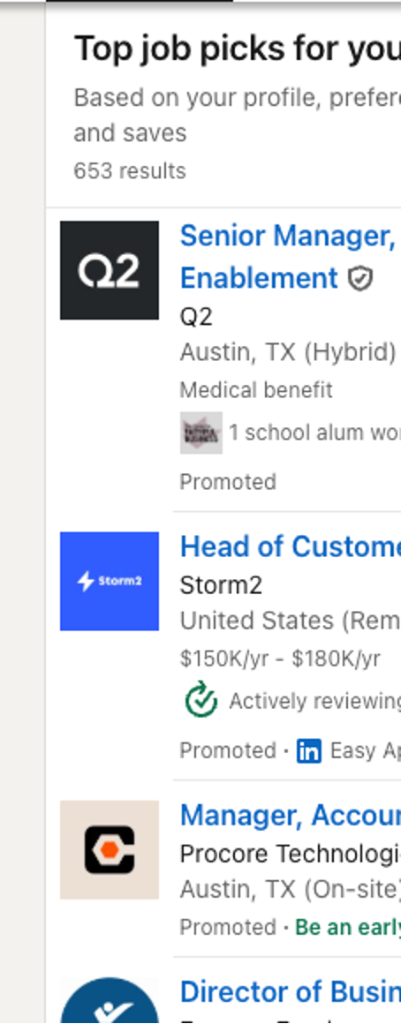
"Top Job Picks for You"
- Sponsored roles are overrepresented, compared to manual search
- Listings often feel loosely related to your background
"Jobs Where You'd Be a Top Applicant"
- More genuinely tied to profile-to-role matching
- Fewer overt signals of ad prioritization
- Feels closer to what "Top Job Picks" sounds like it should be
(12)
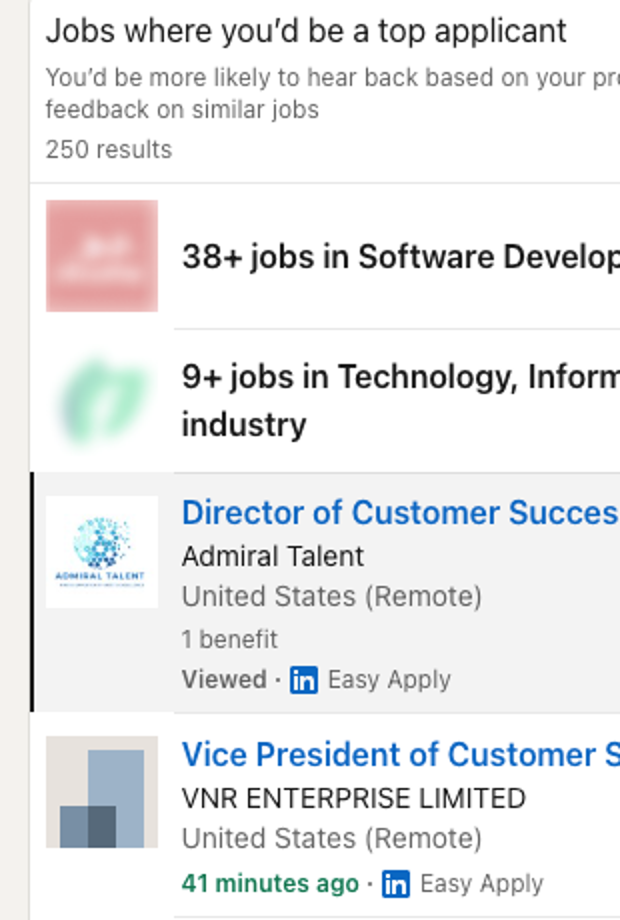
The distinction matters, because only one of these sections (Premium) carries the psychological weight of personalized validation.
And, "Jobs Where You'd Be a Top Applicant" - that's of course locked behind a paywall, and doesn't prioritize Promoted roles.
The Power of the Label
"Top Job Picks for You" is not a neutral phrase.
It implies:
- Someone (or something) evaluated you
- These roles are surfaced because you're a strong match
- There's a signal you should act on quickly
In practice, the approach blends algorithmic matching with paid promotion.
LinkedIn is upfront that these jobs are sponsored, labeled as "Promoted," but it's clear to this author that a category labeled, "Top Job Picks For You" is being framed as guidance, not advertising, when the reality shows us something very different.
That's where we have a problem: the implication is fit, but the driver is payment.
Where LinkedIn Deceives
According to LinkedIn:
LinkedIn 'Job Recommendations' are personalized job listings shown to you based on your:
- Job searches and alerts
- Profile details (like title, location, and skills)
- Activity on LinkedIn (such as jobs you view, save, or apply to)
(13)
That may be (though questionably) true for their 'Job Recommendations' algorithm (I've learned to be skeptical when a generic term is capitalized), but this is different from the "Top job picks for you" and "More jobs for you" sections under your Jobs section.
Take a look for yourself: go to Jobs, and at the top, look at the roles surfaced under "Top Job Picks for You." Then, click "see more" and take a look at the jobs there.
How many "Promoted" jobs do you see?
Actually, a better question is: how many non-promoted jobs do you see?
And here's the kicker: there's nothing in LinkedIn's help or privacy policy that declares this.
The explicit absence of this is nothing short of intentional on their part.
So in summary, perhaps their "Job Recommendations" as described on their "Help" site is framed as being uniquely tailored to you, but in reality, meaningful insight drawn from your data in the Free sign-up is locked behind the Premium paywall. Before Premium, you are shown a stream of "promising" roles you're unlikely to land, prioritized not by fit, but by which companies are willing to pay for their placement.
Anxiety in Context
So, here, at the top of the funnel, you already have uncertainty introduced. Hiring companies have done no wrong, recruiters have done no wrong, but the platform itself has started a process which monetizes unrealistic expectations, unpredictability and lack of transparency. All before a screening happens or an ATS rejection served.
- Why aren't I hearing back?
- Why do these jobs keep resurfacing?
- Why do I feel like I'm missing something?
Enter Premium.
Not because Premium magically makes jobs better, but because it offers relief:
- Visibility into applicant counts
- Signals about competitiveness
- The illusion of control in an opaque system
(14)
Premium doesn't solve the structural problem. It soothes the emotional one.
That's not accidental, but it is questionable.
Who This Actually Benefits
Let's be clear about incentives:
- Recruiters benefit from promoted placement and targeting
- LinkedIn benefits from recruiter ad spend and job seeker subscriptions
- Job seekers bear the cognitive and emotional cost of sorting signal from noise
The job search isn't casual browsing. It's not shoes or streaming subscriptions. It's tied to housing, healthcare, family stability, and self-worth.
When recommendation systems blur the line between what's relevant and what's paid for, the cost isn't just confusion, it's prolonged stress.
It enables a practice of hiring companies paying to repost jobs because of over-response and job seekers paying money to apply for the right jobs.
Transparency isn't about eliminating ads. It's about honesty in framing.
If something is an advertising play, call it that. If something is a matching service, protect its integrity.
A Better Standard
Imagine a world where:
- Recommendation labels reflect intent, not aspiration
- Paid placement is separated from "fit-based" guidance
- Job seekers aren't nudged toward upgrades to decode the system
That wouldn't kill the business model. It would strengthen trust in the platform that claims to power careers.
Being subtly misled while you're already anxious makes a challenging situation worse.
And you who bears that anxiety and frustration from job seekers?
It's the very companies paying to advertise on the platform itself.